What Does a Doula Really Do? (and What We Don’t)
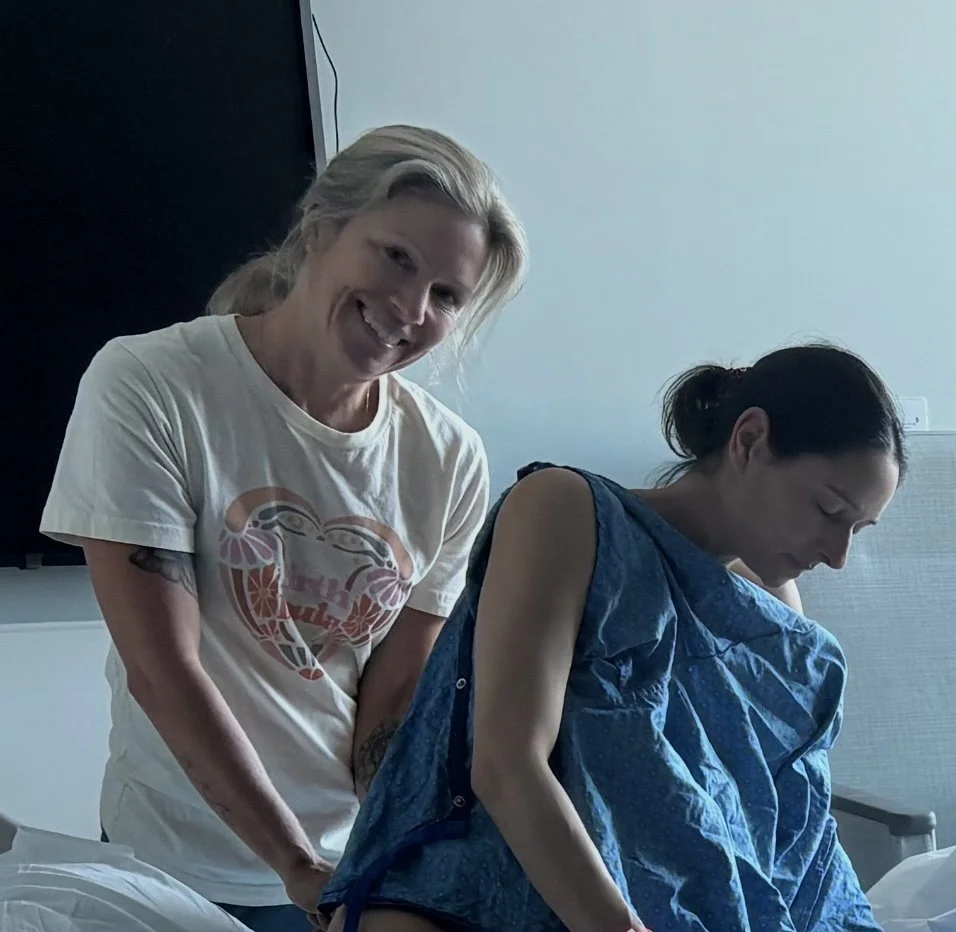
If you’ve heard the word doula but aren’t totally sure what that means, you’re not alone.
Many families find me after a Google search that starts with something like:
“Do I need a doula?”
“What does a birth doula actually do?”
“Is a doula just for home birth?”
Let’s clear things up—plainly, honestly, and without hype.
A doula is not a replacement for your medical provider.
We’re also not a luxury item, a coach barking instructions, or someone who takes over your birth.
So what do doulas actually do? And just as importantly, what don’t we do?
What Is a Birth Doula?
A birth doula is a trained, non-medical professional who provides continuous emotional, physical, and informational support to a birthing person and their partner during pregnancy, labor, and birth.
The key word here is continuous.
Unlike nurses or midwives—who may rotate shifts, manage multiple patients, or focus on clinical tasks—a doula’s only job is to support you.
This support is rooted in:
Evidence-based birth practices
Respect for your autonomy and choices
Trust in the physiological process of birth
Compassion for the very real emotional experience of labor
Doulas work alongside doctors and midwives, not instead of them.
What Doulas Actually Do
1. Provide Emotional Support (Before, During, and After Birth)
Birth is not just physical—it’s deeply emotional.
A doula:
Helps normalize fears and uncertainty
Offers reassurance during intense or vulnerable moments
Holds calm, steady presence when things feel overwhelming
Supports both the birthing person and their partner
Sometimes this looks like encouragement.
Sometimes it looks like quiet grounding.
Sometimes it’s simply reminding you: you’re not alone.
2. Offer Physical Comfort Measures During Labor
This is the part many people picture—and yes, it matters.
Doulas are trained in hands-on comfort techniques, including:
Labor positioning and movement
Counterpressure and massage
Breath support and relaxation cues
Heat, cold, and comfort tools
Supporting rest and conservation of energy
These techniques aren’t random—they’re based on physiology and decades of birth experience.
And no, you don’t have to want an unmedicated birth for this to be helpful. Doulas support all types of births, including epidurals and cesareans.
3. Help You Understand Your Options (Without Telling You What to Do)
A doula does not make decisions for you.
Instead, we help you:
Understand common procedures and interventions
Ask informed questions
Explore benefits, risks, and alternatives
Feel confident advocating for yourself
This is often called informed consent, and it’s one of the most powerful tools in birth.
The goal isn’t a “perfect” birth—it’s a birth where you felt heard, respected, and involved in your care.
4. Support Partners So They Can Support You
We support both of you!
A doula can:
Help partners know what to do and when
Offer suggestions without pressure
Give partners breaks when needed
Encourage connection between partners during labor
Most partners tell me afterward:
“I felt more confident because you were there.”
5. Provide Evidence-Based Continuity of Care
Research consistently shows that continuous labor support—especially from a doula—is associated with:
Shorter labors
Reduced need for interventions
Lower cesarean rates
Higher satisfaction with the birth experience
(These findings come from large bodies of research, including Cochrane Reviews.)
But beyond the statistics, continuity matters because trust matters.
By the time labor begins, your doula already knows:
Your hopes and concerns
Your communication style
Your birth preferences
What helps you feel grounded
That relationship changes the experience in subtle but powerful ways.
What Doulas Do Not Do
This part is just as important.
❌ Doulas Do Not Provide Medical Care
We do not:
Perform exams
Monitor fetal heart tones
Give medical advice
Diagnose or treat conditions
That role belongs to your midwife or doctor.
❌ Doulas Do Not Replace Your Partner or Provider
A doula doesn’t take over your birth or speak for you.
We support you in communicating with your care team and making decisions that feel aligned with your values.
❌ Doulas Do Not Push a Specific Birth Agenda
A good doula does not pressure you toward:
Unmedicated birth
Home birth
Avoiding interventions at all costs
Your birth is your birth. You know what is best for your family. Our role is to support your choices, whatever they may be, with respect and evidence-based information.
Who Can Benefit from a Doula?
Short answer: all birthing people.
Doulas support:
All kinds of families! first time, single parents, multiples, subsequent births
Families planning hospital, home, or birth center births
VBACs
Planned cesareans
High-risk pregnancies
People with medical or birth trauma or anxiety
Is a Doula Worth It?
Many families say the value of a doula wasn’t just what happened during labor—it was:
Feeling more prepared going into birth
Feeling supported when plans changed
Feeling grounded during intense moments
Feeling empowered afterward, regardless of outcome
Birth is one day—but how you feel about it can last a lifetime.
If you live in the Denver or Boulder area and you’re curious about what doula support could look like for your birth—your values, your choices and your experience-
A conversation can be a good place to start. Reach out today! I would love to connect.